

The human eye is one of the most sophisticated product of evolution nature has to offer. The process of receiving electromagnetic light through the cornea which translates into images that the human brain can decipher and react to is awe inspiring. The corneas are the transparent part of the coat of the eyeball that covers the iris and pupil and admits light to the interior. Without our corneas working properly, then being able to see is nearly impossible. Why does this fun fact appear on a Catholic Blog? Because I believe it’s a good metaphor for the canon of scripture.
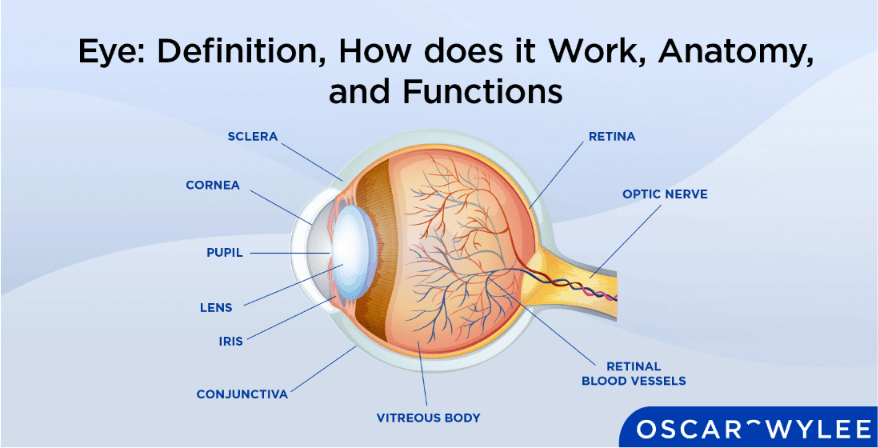
Protestants believe in Sola Scriptura and refuse to acknowledge obedience owed to the Roman Catholic Church’s magisterium. They believe that there is no scriptural evidence that the Roman Catholic Church is the true church. Without a biblical source or foundation, a Sola Scriptura Protestant will always be skeptical of the Catholic Church claiming to be the true church.
How often do you look at your Corneas? That would be my response if a Protestant asked me, “Can you point to scripture to prove that the Catholic Church is the true church?” Honestly, there is no scripture to reference. However, that isn’t a problem for Catholics because we believe that Divine Revelation is also revealed through Sacred Tradition and not just Sacred Scripture.
Some Sola Scriptura enthusiasts assume the Bible dropped out of the sky and that’s just not true. We who are able body are able to see because all of the eye’s organs are functional. We can’t look at our corneas, because our corneas is that which gives us the ability to see. The same for the canon of Scripture: We can’t use Scripture to determine the canon of Scripture.
The Bible is made up of 73 books. 7 of those books are considered the Deuterocanonical by Protestants. Which is why Protestants say there are 66 books in the bible. Because the 7 books were a part of the canon until the Reformation in the 16th century when it was given less importance which devolved into no importance. There are plenty of historical records in Church Councils that list the canon used by the Catholics, but such historical records are dismissed by Protestants as an ancient conspiracy to hide the “True Church.”
There was an intelligent design to the 73 books of the bible. That is the proof the Church put together the bible. The modern technology spoils our image of the difficulty to preserve 73 books for a community, then have those 73 books copied and preserved through the centuries. It was no accident, but an act of worship towards God to keep the books of the bible that we know today. Imagine the alternative, we have to track down 73 separate books and make sure we collect the entire series versus having all 73 books compiled to a single spine.
Did the Catholic Church put together the Bible? Yes. The books that were chosen were used in liturgical worship services by the Early Church. The books read during worship were given an exalted status which then led the Early Church to make a list about what books ought to be read during worship services. The list used today was based on the Early Church’s judgment on what books aided our understanding of God.
There are other books that were contenders to be consider Sacred Scripture that were not chosen. They were not chosen due to failing to meet the requirements set by the Early Church. I don’t see Protestants replicating the decision making process of the Early Church every generation. Instead, the 66 books of the Protestants are passed down from one generation to the next without a critical thought of increasing or decreasing the amount of books as the canon of scripture.
Our corneas are responsible for us to see light, but we can’t see our corneas seeing the light for obvious reasons. The Catholic Church is responsible for compiling the Bible, but we can’t read Scripture to learn the history of how and why the books were chosen. Sola Scriptura breaks down immeadiately if we cannot assume the books of the bible are truly from God. Catholics do not have this issue, because we use the Apostolic Authority from the successors of the Apostles (A.K.A. Bishops in the Magisterium) and Sacred Tradition to corroborate the divine claims made in Sacred Scripture.
Catholics do not believe in Sola Scriptura for good reasons. It is all too easy to take a bible verse out of context or not have the intellectual understanding to comprehend the magnitude of knowledge needed in language, history, culture, theology, and spirituality to understand the Bible. We do know there is a Church that Christ established to continue the ministry given to them by the Son of God. We have theologians and bishops whose entire life is dedicated to make sure orthodoxy continues undisrupted from Jesus of Nazareth to the modern day.
If we go back to the cornea metaphor, then imagine that sola scriptura, without the Magisterium and Sacred Tradition, is the same as someone being color blind. There were disputes, from Saint Jerome specifically, about the Deuterocanonical books being divinely inspired. Saint Jerome’s arguments were heard and then denied, because the Magisterium of the day wanted to preserve the canon that they received through Tradition. With charity, Saint Jerome was color blind, but was obedient to people who were not color blind.
Then we fast forward to the Reformation, there are a lot more colorblind people who band together. They say the Deuterocanonical books are important but not as important as the 66 books. The Council of Trent wanted to set them straight, by insisting there are more colors than they are able to perceive. The Reformation (or Protestant Revolt as some calls it) rebelled against the Magisterium of the day and proclaimed their color blind perception as the truth all people should follow.
After a few generations, the Color blind people isolated themselves from people who saw more colors. The seven books that was considered important was dropped completely. What’s worse is if the color blind people meet some who is not color blind and uses all 73 books of the original bible, then the full color people are labeled as liars or unable to perceive the true reality.
Now, we have this clash of realities. One group says they see all the colors there are to see, and the other group also say they see all the colors there are to see. How are we able to settle this dispute when both sides are unable to change their perception of reality? The Catholic Church has a mechanism based on Sacred Tradition and the Magisterium. Through the protection of the Holy Spirit, the Church of Rome has the most consistent doctrine back to the time of Saint Peter in Acts 15.
The Protestants do not have any such mechanism if they truly are Sola Scriptura. As Protestants are quick to point out, there is no Scripture that identifies a Church putting together the Bible. How can we possibly know the correct canon of books through Sola Scriptura? They simply cannot. Sola Scriptura believers have a blind faith that the books in the Bible are truly divinely inspired. Otherwise, they must acknowledge an authority outside of the Bible which is able to make declarations of Divine Revelation such as the canon of Scripture.
Sola Scriptura posits the Bible as the sole infallible source of authority for Christian faith and practice. If the authority of the Bible comes into question…? That is the dispute between the color blind people and the full color people. The dispute between Catholics and Protestants. The divine authority of the Deuterocanonical books are under question, but Scripture is unable to defend itself when its authority is questioned. If the Protestants do not wish to respect the authority of the seven books, then there is no scripture that will prevent them.
It’s curious though because respecting the authority of the 66 books is the challenge Protestants have against Atheist or Islamist or anyone who do not believe in the validity of scripture and the practices derived from them. If Protestants are colorblind, then non-bible believers must see in “black and white” if at all. I’m curious what arguments Protestants use to convince the non-bible believers to believe in the Bible. And even more curious if those arguments can be used to defend the 7 Deuterocanonical books?
I’m thankful for the three legged stool of the Catholic Church: Sacred Scripture, Sacred Tradition, and the Magisterium. I know I’m ill equipped to invent such arguments, but, God Willing, there is a Catholic theologian who lives in this generation and lived in every generation prior that is more than equipped to the task. With healthy corneas, we can see the full spectrum of color available to us through Sacred Scripture.


Leave a Reply