
Jesus Christ established a church in the First Century. I believe all Christians can agree to that sentence. The breakdown is about who, what, where, why, when, and how He established the Church. After two thousand years, the question is how much of what we call “The Church” today is divinely inspired or human creation?
The Catholic Church has ways to establish what is “Big T” Tradition which is more divinely inspired, and what is “Little t” tradition which is more of human creation. There is also some leeway to admit a combination of both human and divine within the institution of the Catholic Church. Catholics would look foolish if they claim all things “Catholic” have been divinely inspired. We can humbly acknowledge that what Catholics do today may not be what the Early Christians did. However, we can also say what the Early Christians would have done would still feel familiar to what Catholics do today.
Protestants love to emphasize the very human elements of the Roman Catholic Church. I hope they are charitable enough to say there are some things Catholics do that are inspired by the Divine. They also value “Sola Scriptura” which says all of their beliefs and practices ought to be bible inspired or found in the bible in some way. The typical Catholic response is “Where does it say in the Bible to do that?” The responses is uncharitable and doesn’t listen to the arguments for Sola Scriptura. Catholics would agree that Scripture is a source of Divine Revelation and no human proclamation ought to contradict scripture. We disagree that Scripture is the only source of Divine Revelation.
How can we Catholics show Divine Revelation can be found outside of Scripture? Namely, in Sacred Tradition and the Magisterium. If we truly want to disprove Sola Scriptura, then we need protestants to become comfortable with the idea that human traditions can help magnify divine inspiration. Let us talk about the human tradition that all Protestants Shamelessly use: Chapter and Verse scripture quotes.
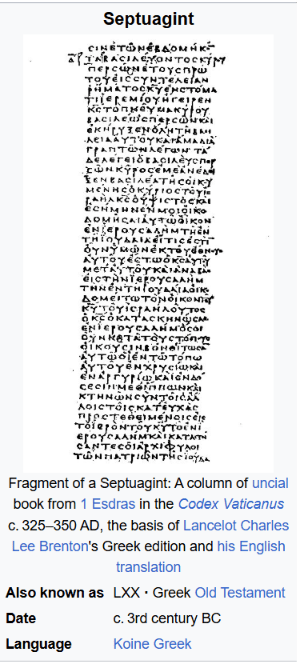
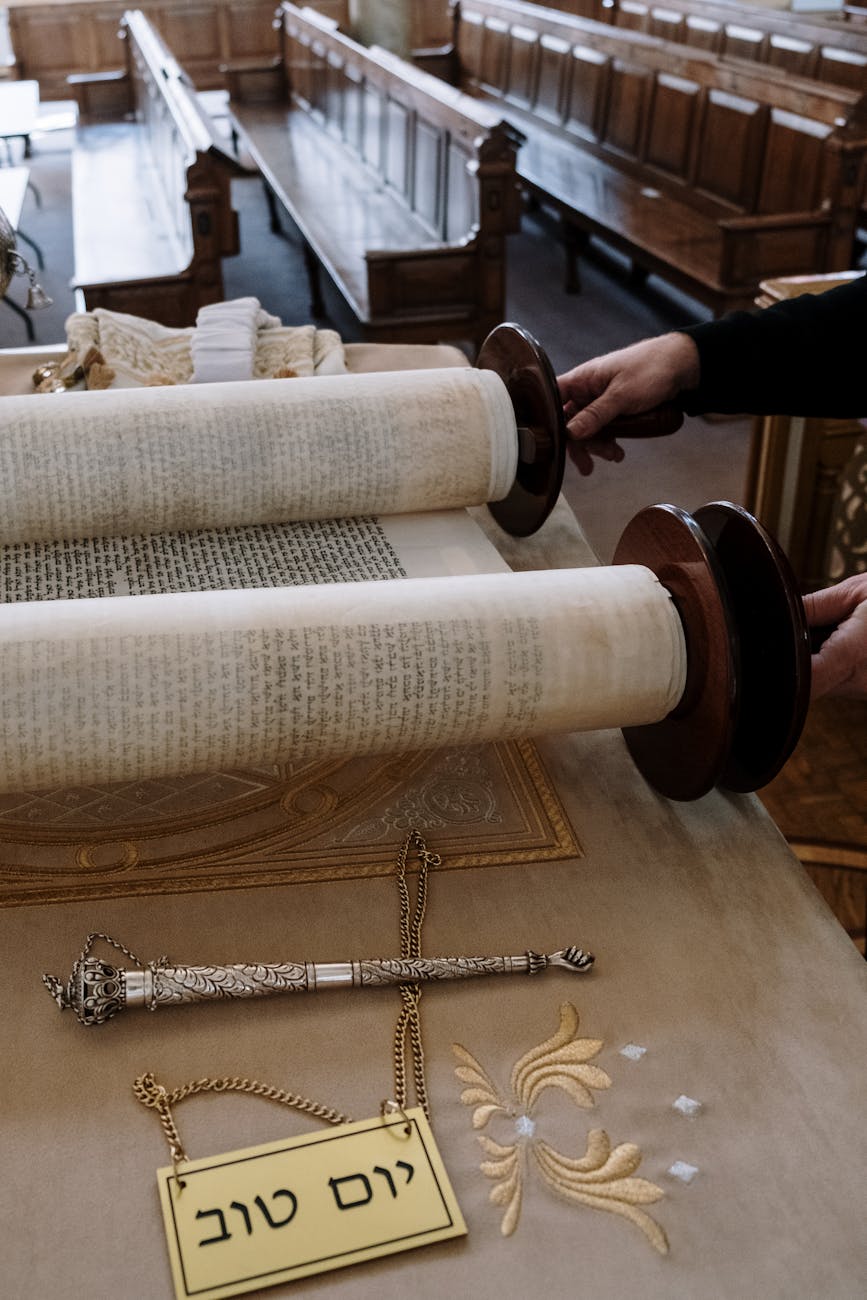
The original bible was not a book. It was a bundle of scrolls. There was the Septuagint (above) that put the Old Testament scrolls together. The origins of the New Testament was even more chaotic, because it was scattered throughout the Early Church. Imagine being in Jerusalem or Antioch or Corinth or Ephesus and your church receives a letter from Paul or Peter or James one of the Big Deals of the Early Church. The foundation of the Old Testament was verbal tradition put into writing. The foundation of the New Testament was letters given heightened importance. Putting the New Testament together had to be a little chaotic.
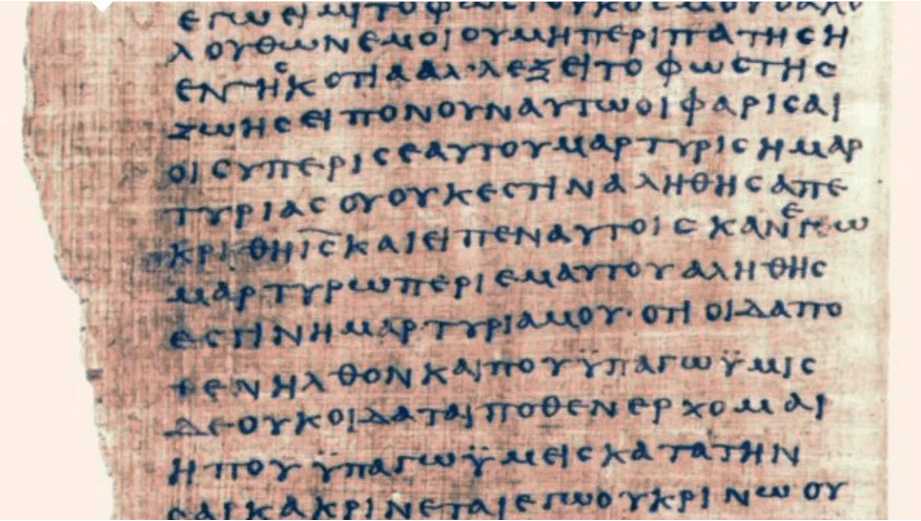
To add to the chaos, the originals did not use periods, paragraphs, and spaces as a way to maximize surface area of writing resources. If you look above, you can see a sample of a manuscript. The divinely inspired is in the manuscript, but the Chapter and Verse we know today is a human institution. To help transition Protestants away from Sola Scriptura we need to have a discussion how Human Institutions does not contradict Divine Inspiration and may even magnify it.
The idea to separate the scriptures into chapter and verse did not even begin until 1205 when Stephen Langston (later archbishop of Canterbury) made a Greek New Testament with chapter versus. The first Bible to use chapter and verse was the Geneva Bible in 1560 which was also an English translation that took advantage of the chapter and verse format made by Robert Estienne during the Reformation Era. The Catholic version was the Douay-Rheims bible in 1582.
The Chapter and Verse we know today barely existed at the start of Lateran IV Council (1215). The Patristic Era is considered the foundation of Christian Theology which ended, at the latest, in the eighth century. Not to mention, the Apostle age in the first century who was reading a letter from the New Testament writers without the recognition that they were reading scripture with the same authority of the Hebrew Scriptures. For centuries, theologians and scholars read the Sacred Scriptures with no chapter and verse format; just straight words on a page. There are bibles that do not have chapter and verse if you are curious to experience Scripture without the imposed structure.
The most striking consequence of chapter and verse parsing can be found in Revelations 11 & 12. There is a critical passage about the Mother of God that is disrupted due to the chapter break. The passage is about the “Third Woe” as the seventh trumpet rings out but is interrupted by the chapter break.
CHAPTER 11:14 & 19
14 The second woe has passed; behold, the third woe is soon to come.
19 Then God’s temple in heaven was opened, and the ark of his covenant was seen within his temple. There were flashes of lightning, rumblings, peals of thunder, an earthquake, and heavy hail.
CHAPTER 12:1-7
And a great sign appeared in heaven: a woman clothed with the sun, with the moon under her feet, and on her head a crown of twelve stars. 2 She was pregnant and was crying out in birth pains and the agony of giving birth. 3 And another sign appeared in heaven: behold, a great red dragon, with seven heads and ten horns, and on his heads seven diadems. 4 His tail swept down a third of the stars of heaven and cast them to the earth. And the dragon stood before the woman who was about to give birth, so that when she bore her child he might devour it. 5 She gave birth to a male child, one who is to rule all the nations with a rod of iron, but her child was caught up to God and to his throne, 6 and the woman fled into the wilderness, where she has a place prepared by God, in which she is to be nourished for 1,260 days.
Revelations 11:19 mentions the Ark of the Covenant and Revelations 12:1 mentions a woman. Catholics have taken this passage to reference Mary the Mother of Jesus Christ Son of God. Revelations 12:6 is often cited as a vague allusion to the Assumption of the Virgin Mary. We can see how if we read only Chapter 11, then read Chapter 12 the connection between the Ark of the Covenant and the Woman would be separated.
The separation is caused by a human institution. Therefore, another human institution with the guidance of the Holy Spirit, the Magisterium, seeks to prevent the artificial separation from diluting the Sacred Scriptures. The Magisterium has taught the proper interpretation of scripture that has been aligned with what have been passed on down by the Apostles. Even Saint Jerome had questions about the Deuterocanonical books, but his objects were denied by the Magisterium of the day. Taking the books out is a human tradition. Having the deuterocanonical books included has been a part of the Tradition far longer.
Sola Scriptura does speak to a truth that all teachings of Christ’s Church needs to be source by Divine Revelation. The difficulty is that it is all too easy to have human elements cloud the division between the divine and humanity.
Even Saint Peter commented about the confusion of Scripture in 2 Peter 3:15-17:
And count the patience of our Lord as salvation, just as our beloved brother Paul also wrote to you according to the wisdom given him, as he does in all his letters when he speaks in them of these matters. There are some things in them that are hard to understand, which the ignorant and unstable twist to their own destruction, as they do the other Scriptures. You therefore, beloved, knowing this beforehand, take care that you are not carried away with the error of lawless people and lose your own stability.
From the New Testament, From one of the Apostles, we hear a cautionary approach to how people should understand scripture. Saint Peter says, “Listen to us, not them.” We need a teaching authority in the Church to help explain what is the proper interpretation. If we rely to much on our own understanding, or on a popular erroneous interpretation, then we are sure to not come to know Jesus Christ as the Apostles did. As Saint Jerome says, “Ignorance of Scripture is ignorance of Christ.” Thankfully we have the human tradition of chapter and verse to better discuss Sacred Scriptures.


Leave a Reply