The casual mention of usury usually leaves people puzzled. The word itself has grown out of fashion and a cursory understanding makes it seem like usury is everywhere. For Myself, I did not know what it was until I wrote a paper about it in my grad class and have been obsessed with it since. The lay man version of usury is high interest rates, but that’s an imprecise definition. I’ll break down a financial transaction and will show you when a loan could be come usurious.
There are those who say the Catholic Church changed it’s teaching on usury. And they have some valid criticism. The actual definition of usury is tricky to track down with even the dictionary disagreeing about its definition. Was this a change of doctrine? I WOULD ARGUE IT WAS NOT, because of a change of the nature of money but more on that later.
The Catholic dictionary says, “Taking of excessive interest for the loan of money is the modern understanding of usury” with the caveat that money has changed. The New Advent Encyclopedia put it very clear that “The mutuum, or loan of things meant for immediate consumption, does not legalize, as such, any stipulation to pay interest; and interest exacted on such a loan must be returned, as having been unjustly claimed.” Despite the article being about usury, New Advent does not have a precise definition to apply. In fact, it could be argued there has not been a deliberate effort to define usury due to the growing capitalistic mechanism of the economy. After all, it would never be a popular opinion to advocate the end of financial debt capital which is the lifeblood of a capitalistic economy.
One thing that we can all agree on comes from Benedict XIV’s letter on usury:
I. The nature of the sin called usury has its proper place and origin in a loan contract. This financial contract between consenting parties demands, by its very nature, that one return to another only as much as he has received. The sin rests on the fact that sometimes the creditor desires more than he has given. Therefore he contends some gain is owed him beyond that which he loaned, but any gain which exceeds the amount he gave is illicit and usurious.
II. One cannot condone the sin of usury by arguing that the gain is not great or excessive, but rather moderate or small; neither can it be condoned by arguing that the borrower is rich; nor even by arguing that the money borrowed is not left idle, but is spent usefully, either to increase one’s fortune, to purchase new estates, or to engage in business transactions. The law governing loans consists necessarily in the equality of what is given and returned; once the equality has been established, whoever demands more than that violates the terms of the loan. Therefore if one receives interest, he must make restitution according to the commutative bond of justice; its function in human contracts is to assure equality for each one. This law is to be observed in a holy manner. If not observed exactly, reparation must be made.
My apologies for the thick theology. As I said, there hasn’t been much time spent in simplifying the teaching to the point of clarity where most people could understand. The basic is that there should be an equal exchange. If one side forces an inequality, then that side commits an injustice. The question become, “Is interest on a loan justified to maintain equality between the borrower and the lender?”
Money is Different Now
Now, this is a good time to talk about how money has changed in the United States in modern times at least. Currently, we have our money get its value from the value of markets. This creates a volatile currency which has only become more volatile after the United States dropped the gold standard. The value of money has never been more unstable. With gold, at least it is a physical object that does not fluctuate. One pound of gold is still one pound of gold. Any fluctuations was about how much could one pound of gold buy.
In ancient times, there were some ideas of currency, but for the most part it was a barter system. Remember, currency is a medium of exchange. As long as a society externally imposes upon something that represents a value of exchange it could serve as currency. But in a barter system, there is no currency. Instead, there is an exchange of goods and services. Some of those exchanges could be precious medals; such as jewels or gold. In terms of borrowing in a barter economy, it becomes pretty cut and dry. A transaction would be: I will give you ten bars of gold and I get back ten bars of gold. Expecting 11 bars of gold would be usurious, because the borrower would gain more than they gave. It is an injustice and the equality of the transaction would be broken in favor of the lender.
The reason why usury is a sin becomes even clearer when we look at the financial contracts in Exodus and Leviticus. The mosaic code allowed for debts to be forgiven after a certain number of years. The Jewish people had a “Jubilee Year.” (More info on Jubilee year) In other words, the system was always designed for people to be freed from debt on a regular basis. If we understand usury as a type of financial slavery, then it would be a more precise definition than arbitrary interest rates. To better ascertain usurious transactions we can look for whether or not a reasonable person could fulfill the debt transaction based on the terms of the loan itself without a loss of dignity. Even then, that question is flawed and could lead to abuses. Coincidentally, this flawed definition is a small example as to why defining usury has been so elusive for canon lawyers.
Identifying usury is easier with non-monetary transactions. Let us set up some examples of non-monetary goods and work our way towards money. We will look at borrowing a shovel, borrowing a gallon of water, and borrowing a pair of cows.

The Shovel
Imagine we want to lend a shovel to our neighbor. What are the expectations? That we get our shovel back in a timely manner in pretty much the same condition. That would be a just exchange. If we want to commit usury in this circumstance, then we would ask not just our shovel back, but maybe a second shovel as well. I hope we can agree expecting a second shovel would seem ridiculous. The shovel itself can be reused. Which means it is not a consumable good. Usury tends to be about asking for interest on a consumable good. This shovel example will help see what a lender and borrower relationship is in its simplicity.
- What if your neighbor broke your shovel? The just thing would be for the borrower to pay for a replacement in order to restore to the lender what was borrowed.
- What if you borrowed a shovel and discovered it was broken, but the lender demands the borrower fixes the shovel? It seems unjust of the lender to demand a higher quality shovel than what was borrowed especially if the purpose of borrowing the shovel remains unfulfilled.
- What if the shovel is unable to be returned for whatever reason? It is a clear injustice towards the lender if the borrower fails to return the shovel.
- What if the borrower polishes the shovel or replace the shovel with a higher quality? It is a nice gesture of gratitude, but could also be an injustice towards the borrower due to the borrower embracing costs to give benefits to the lender.
- What if you bring back a shovel of same quality but it is a different shovel? There is an equivalent exchange but there seems to be an injustice of the lender not having been return his own property.
- What if the borrower uses the shovel in a way to gain fame and fortune? It seems the lender would deserve some acknowledgement of providing the shovel, but no major share in the fame and fortune.

The Gallon of Water
Imagine you borrow a gallon a water. This example provides us a chance to look at a consumable good. Water is most likely consumed and if it needs to be replaced, then more water needs to be acquired. Water is a little closer to money than a shovel which is a non-consumable good. Usury in this situation would involve the lender receiving more water than was given. However, water offers some more variables than shovels. For example, if water travels through a hot area, then evaporation becomes a factor. If the borrower borrows a gallon of water, but a cup of water is evaporated by the time it gets to the lender, then the lender experiences an injustice. The borrower needs to give a gallon and a cup in this situation so that the lender may receive back a gallon despite the evaporation.
- What if the borrower borrows clean water and returned dirty water? The lender received a lesser good and experiences an injustice.
- What if you borrow water and the borrower was unable to use it for its intended purpose? It is unfortunate for the borrower but the lender bares no fault and still is owed the water that was borrowed.
- What if the borrower used the water for a malicious purpose? There would be no culpability on the lender’s part and the borrower still owes water to the lender. However, the lender suffers a potential additional injustice by having his reputation associated with a malicious act.
- What if the lender gave a gallon of water, and the water was returned in a different container? It seems unclear if its an injustice, because there is a difference in what is returned. However, if the focus is solely on the gallon of water then it would be an equivalent return. The container seems secondary and may or may affect the value to the transaction. If the new container poisons/pollutes the water than the value of the water would drop. If the container itself is more valuable than the previous container, then the value of the water is unaffected but the lender experiences an increase in value nonetheless.
- What if it is unclear if the borrower or a lender receives/gives a gallon of water? There could be deceit from either side, but an objective standard that both party agrees to and can independently verify would solve this conflict.
A pair of cows

Let us introduce a little more complexity with a pair of cows. The shovel was inanimate, the water was consumable, and now we have an organic perishable good. A cow could be a commodity in a pure utilitarian sense, but it could also be irreplaceable to a more sentimental owner. In addition, cows require maintenance and care beyond the initial transactions. Moreover, cows are able to reproduce whereas a shovel and water cannot. In order to commit usury, it would require the lender having to demand a greater value of cows than is owed. This could be quantity of cows or quality of cows. For example, if we borrow a 1200lbs cow, but return a 1300lbs cow then technically, the borrower returned a higher quality cow than they borrowed provided the cow maintains all health metrics. An usurious transaction would demand a higher quality cow or a greater quantity of cow that was lent.
- What happens if a borrower does not take good care of the cows? Then there is an injustice towards the lender who received a lower quality cow than was given.
- What happens if a lender does not take good care of the cows? Then it would be an injustice for the lender to expect a higher quality cow back. The borrower would experience an injustice for a lower quality cow, but any injustice in that regard could be remedied with full disclosure by the lender.
- What if the value of the cow drops outside the control of the borrower? For example, if it was an elderly cow and another health complication happened due to old age. The cow itself becomes less valuable to no fault of the borrower. It would seem an injustice towards the lender, but there would be less culpability towards the borrower. There could be some compensation owed to the borrower, but that would be a determination of local customs. The borrower did justly return the cow that was borrowed and made a good faith effort to maintain the health of the cow.
- What if the cows are damaged/infirmed/died while they were being borrowed at the borrowers fault? Then there would be an injustice towards the lender due to not receiving the property that was lent in the same quality or not receiving it at all. The borrower would need to return to the lender an equivalent value of some kind in order to avoid an injustice towards the lender. The borrower assumedly has failed to maintain proper care of what was borrowed out of avoidable neglect.
- What happens if the borrower or lender deceives the other party? There is an injustice because critical information was withheld which would have affected the decision of either the borrower or lender in a significant way. All transactions ought to have honest transparent disclosures to avoid injustices.
- What if the borrower is ignorant of the value of the cow? It would seem an injustice towards the borrower, but the culpability of the lender would be less. It does introduce two values though: the market value and the agreed upon value. The market would be the value that would be consider “fair” given the circumstances of the deal. The agreed upon value is at risk of being unjust if there is a grave mismatch of the value of the cow and the agreed upon value that must be returned.
- What happens if the borrower borrows a pair of cows and the cows birth a third cow? It would seem the borrower would benefit more in the transaction unless the third cow was returned to the borrower in a separate transaction. Questions of ownership laws would need to be decided by the proper level of government. The matter is made complicated by the fact the third cow can not be proportioned out without dying and there are additional costs/benefits from birthing a cow. After deciding ownership of the third cow, it would be a safe assumption that whatever side that receives the cow ought to offer some form of compensation to the other party.
What Did We Learn About Usury?
We could probably go deeper and explore more scenarios but these should be sufficient for our exploration of money. From the shovel, we know that the lender ought to receive what was given and nothing more or less. From the water, we see that the value which the borrower returns to the lender can be greater without injustice. Also, we see that the borrower can fail to benefit from the water yet still is required to fulfill their obligation to the lender. From the cows, we see how borrowed property can change value during the length of the loan and would require more negotiations to reach a just conclusion.
Factors For our Consideration
We mentioned it before and I’ll say it again, but the nature of money is different now than several thousands years ago. One factor that is different is it costs to borrow money. If we are talking about financial institutions in the United States, then the financial system is based upon a intricate series of loans. The bank themselves don’t use their own money, but borrows it from the federal reserve. Therefore, the banks suffer a cost from lending out money and the banks suffer opportunity costs by forgoing the next best investment of the money.
In our examples, this would be similar to how the lender would not benefit from what was borrowed while it is being borrowed. The lender then begins the transaction on a negative balance as opposed to a equal transaction of value. If we are talking about shovels, then imagine if the shovel was an inconvenience for the lender to borrow (ex: they have to drive two hours to get it.) If we are talking about water, then imagine lending water would be at the expense of properly watered crops. If we are talking about cows, then imagine lending a cow meant all the hassle of transporting the cow.
The second factor is inflation. Money is not a stable asset. It fluctuates with market rates and can go up and down on any given day. Money in the 1970s does not have the same value of the 1940s nor of the 2020s. If we were talking about the shovel, imagine borrowing a large shovel and returning a smaller shovel. If we are talking about water, imagine the water evaporating after it was sent. If we are talking about cows, then imagine the cows losing weight which leads to a lower price at the market. A $10,000 loan given in 1970s money is not the same as getting $10,000 in 2020. The lender would have less money due to overall inflation.
The third factor is the benefit towards the borrower. In short, debt is future money. If we take on the loan, then the assumption is we will have the future money needed to pay off the loan. In terms of business ventures, some business ventures cannot begin without the initial capital which is why they need the loan. Therefore, if these new ventures are able to payback the loan with interest, then that means not only did they make enough money to pay off the loan, but they made an even greater amount of money than what was given to them.
For example, if a bank lends out $10,000 and the business uses that money to make $15,000 dollars, then there is an additional $5000 in the transaction that did not exist in the initial equation. The lender may get back their $10,000 but it seems that the borrower benefited more than the lender did. If this was the shovel example, then imagine the borrower borrowed a shovel to start a shoveling business and didn’t give any profits to the lender. If this was the water example, imagine the borrower only borrowed the water because it was needed by a influential person in an emergency and no recognition was given to the lender. If this was the cow example, then imagine the cows gave birth and the borrower kept it a secret from the lender.
It would seem there would be a disproportionate benefit towards the borrower and the lender may be owed to some compensation. However, the nature of usury is when we demand in excess the value that was given. It very well could be just that the lender may never get any of the $5000. If it is an injustice to demand a portion of the $5000, then a separate circumstance is when the borrower gives a portion of the $5000 to the lender out of gratitude for their increase of personal welfare.
How can we tell if Something is Usurious?
I will need many more pages than just a blog article for this question. For now, let us give an equation for usury. We must think of a fair value of a loan, then that would set the bar as to what is usurious. These components are variables to account for the various circumstances of the loan:
Loan Value = Principal + Cost of Funds + Inflation + Gratuity
Loan value is the amount that is loaned out. The principal is the initial value of the loan. This is how much the borrower receives. The cost of funds is self-explanatory, but it is the costs associated with the lender lending the money to the borrower. Taking into account the cost prevents the lender from having a disproportionate negative outcome. Inflation is the value lost to inflation. Inflation ought to be factored into the loan in order to maintain equal value to the initial principal. Gratuity is what would be seen as the profit from the lender. This gratuity reflects that the borrower has benefited disproportionately more than the lender and the lender ought to be compensated to maintain an equality at the end of the loan.
In most negotiations, these variables would be negotiated in terms of percentages except for the principal which would be in dollars. The exact methods to calculate them is way beyond the scope of this blog. What is important for us to know is what variables can be negotiated with the borrower.
- THE LOAN VALUE can be negotiated. The borrower may insist on a certain amount, but the lender may also insist on a lower or higher amount due to their own risk mitigation strategies.
- THE COST OF A LOAN is not negotiable between the borrower or lender. The cost of the loan is separate from the transaction between the borrower and lender. The lender may have some influence of the costs, but let us assume the costs are fixed in terms of deciding an individual loan. Some of the cost is associated with the lenders negotiations, but a majority of the costs are decided by higher powers; usually the federal reserve. On an individual loan basis, there would be no room to negotiate the costs.
- INFLATION is not able to be negotiated. Similar to the costs but even more so, the lender has no control over the trajectory of overall inflation. The banks must predict inflation effects and take the risk of either suffering/benefiting from how inflation rates rise/fall. The lender and borrower must both take a risk on future inflation trends. Inflation going up would mean the lender receives less money, and inflation going down means the borrower could have gotten a cheaper rate if they waited. If inflation could be considered negotiable, then it would be due to the competition of various lenders who have different calculations as to what the future inflation trend may be which the borrower could benefit from by shopping around the lending market.
- GRATUITY is negotiable. The gratuity would be the profit of the intuition. The assumption would be that the borrower is now in a better state than they would have been if they were left to their own devices. In honor of the gratitude that the borrower feels, then they are willing to give a little more than they received. If we believe in free will in a market system, then some people would want to give 0% for gratuity, while other people would be more appreciative and would have no trouble of paying X% gratuity. Both scenarios would be just especially if both parties agree to the arrangement. 0% gratuity is just, because the lender has received everything that was given to the borrower. Moreover, let’s be clear a 0% gratuity is when the lender offers a loan at cost and makes no money on the transaction. 0% gratuity would be Just for a bank to agree to, but it is a risky, if not inadvisable, rate to agree to on a regular basis due to the risks that affect any business. Therefore, out of an even greater sense of gratitude for the service provided to the borrower and potential future borrowers, the borrower may agree to X% gratuity.
The Gratuity variable is where the cause of Usury can be found. Let’s say 0% gratuity is that the lender experiences no benefit from the transaction at all and has simply maintained equilibrium. Let’s say MAX% is what the most the borrower would agree to without terminating negotiations in favor of a different lender. We have a range of 0% gratuity to MAX% gratuity which can be negotiated and both borrower and lender can come out justly benefiting. Beyond the MAX% gratuity is where we enter into USURY% range.
USURY% = AGREED UPON% – MAX% gratuity.
We have already established that Usury is difficult to define. This equation may help find some clarity but it still requires a significant amount of subjective judgments in order to ascertain if a loan is usurious or not. MAX% gratuity would be dependent on the borrower. It is possible that a stingy miserly borrower would be unreasonable in their judgement about the amount of gratuity the bank would ask for. It is also possible that a lender may ask for exorbitant rates for no good just reason at the expense of the borrower. Therefore, it is understandable if no concrete objective metric for usury is derived from this equation. Furthermore, there is no such thing as a negative USURY%. Either there is Usury or there is not.
Regardless, let us focus on the fact that MAX% is when the borrower would otherwise leave the negotiations if the percentage is raised further. Then, why would the borrower agree to a higher rate than MAX%? This is where we truly can see a lending institution engage in usurious practices. For what reason did the borrower agree to a higher rate than they otherwise would? In addition, what type of institution would knowingly create an agreement that the borrower is highly resistant to?
The reasons could vary. The borrower is desperate and needs the money in the short-term and cannot fathom taking into account the long-term. The lender has a monopoly of some kind and can offer whatever rates they desire due to a lack of competition. The borrower is financially illiterate and does not understand what the ideal loan for them would entail. The lender is predatory and fails to disclose all of the information to the borrower to ensure they are making an informed decision in their interest. The economy is in such a way that the other factors beside the gratuity is causing the percentage rate to be high (which may not be Usury and just a bad economy). The loan amortization schedule is designed in such a way that the interest paid out is actually greater than the interest payment alleged in the initial loan agreement.
I will write future blog articles to further explain the scenarios I just listed. For now, let us focus on the definition of usury. Did we define it? Probably not. Getting a precise single sentence definition is a tall task for usury. This is due to the subjective nature of the sin. A loan that has 20% interest rate sounds high, but if it is for a venture that is expected (and does) make 80% profit, then the high interest rate loan is more than affordable. At the same time, if someone lends you $200 dollars so that you can make rent, and you reward them with $300 back out of gratitude, then that is technically a 50% return but it doesn’t seem to be sinful. At the same time, if a borrower borrows money for a venture that fails, then it doesn’t seem the lender should be culpable for the failed business venture while also desiring to be compensated to some extent for the loan that they issued.
The equation we gave offers a framework to make a definition. I would define Usury as a financial loan where the borrower is unable to justly exit the loan with dignity according to the initial terms of the loan. The definition is a working definition, but I want to get across that a loan ought to be paid off in such a way where both parties benefit. The lender receives a profit for taking a risk on the borrower. The borrower ought to use the debt to better their lives in a way that would otherwise be impossible without the loan. Most importantly, the loan comes to an end in a timely manner where neither party is adversely affected.
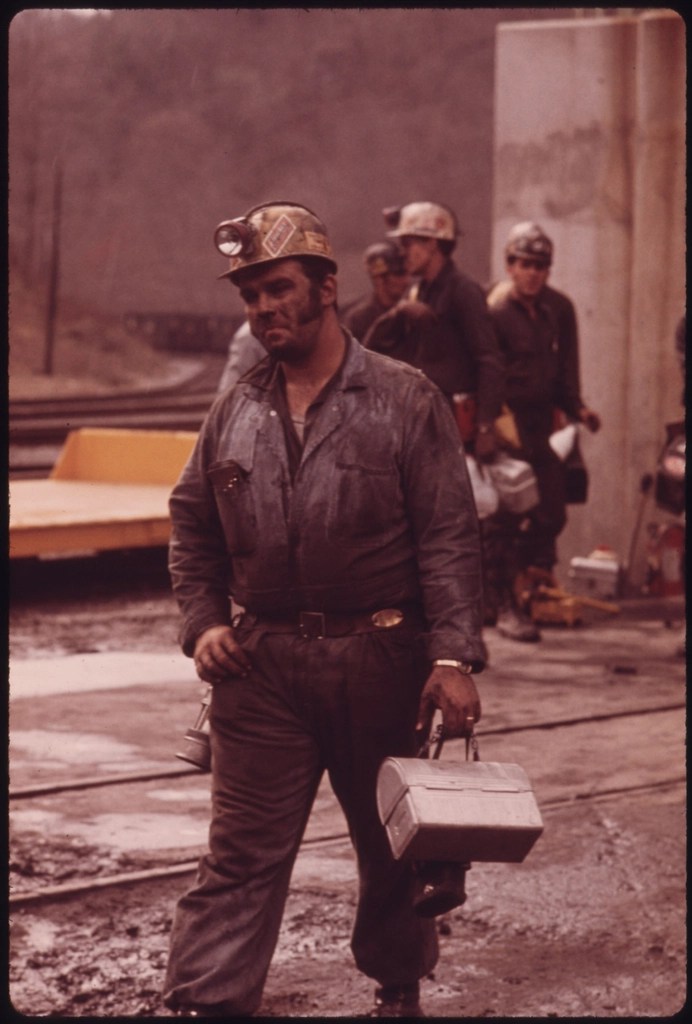
I want to move away from looking at high interest rates as usurious. Instead, I want the focus to be on the dignity of the person’s life before, during, and after the loan. Ideally in a good Capitalistic system, taking a loan out would signify greater prosperity in the future provided one does so with competency and some luck. Perhaps, the best definition of Usury can be found in a song. Sixteen Tons by Tennesse Ernie Ford originally written by Merle Travis.
… You load sixteen tons and what do you get? Another day older and deeper in debt.
Saint Peter don’t you call me ’cause I can’t go. I owe my soul to the company store.
I know I have a lot more thoughts on the topics. If you have thoughts as well, or have questions about certain situations, then please leave a comment and maybe I’ll make a blog out of it.
- Here are some sources for further research
- New Advent.org (catholic Encyclopedia)
- USCCB Predatory Banking & Payday Lending
- Catholic Answers.com
- National Catholic Register article about Usury
- Letter by Benedict IVX on Usury from EWTN website
- Question 78 in the Secunda Secundae of the Summa Theologica
- Catholic Dictionary
 The Average Catholic: More Articles Here!
Leave a comment