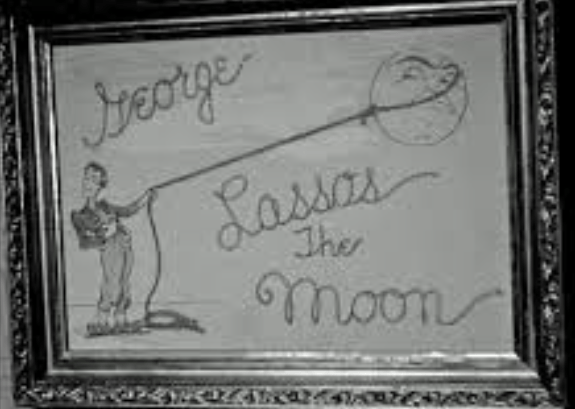
A tale of selfless service, lost purpose, and gratitude. “It’s a Wonderful Life” is a timeless classic that beautifully depicts the importance of being grateful for the life that we live. For our purposes, the movie provides a great dichotomy of “good” capitalism and “bad” capitalism. There is a battle over the lives of Bedford Falls and it is fought between George Bailey and Mr. Potter. George Bailey selflessly builds up the community, while Mr. Potter selfishly extorts the community.
George Bailey is a small time banker that had aspirations of adventure and business. However, unexpected events prevents any attempt to pursue his original aspirations. As a result, George Bailey spends his entire life dedicate to the small town that he so wished to leave. George Bailey grows resentful and easily forgets the beauty of his life, because his aspirations are constantly thwarted.
Due to an unfortunate blunder, the bank that George worked at for years is threatened to be closed down unless they can provide significant capital to keep the bank open. George is not able to provide the money himself, but believes his life insurance policy is enough to cover the required cash. Therefore, George steals himself to suicide in order to continue to provide for his family and community.
George’s suicide attempt was thwarted after the angel Clarence intervened. In the midst of George’s despair, Clarence made it so, “George Bailey never existed.” George then proceeds to see a world where his influence, big and small, never impacted the community of Bedford Falls. After a tour of “Potterville,” George became convicted to keep on living and gratefully embraces his wife and kids and all of the crosses that comes with his current life.
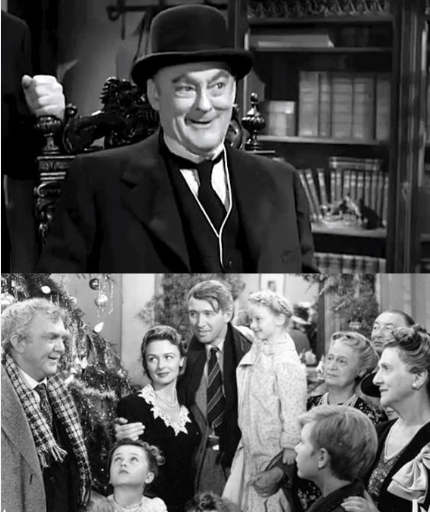
Throughout the movie, George Bailey is at odds with Mr. Potter. Mr. Potter is a wealthy tycoon of the city and has his hands in anything that makes money at Bedford Falls. The thorn in his side is the George Bailey’s Savings and Loans which consistently obstructs Mr. Potter’s total control over Bedford Falls. Mr. Potter is focused on making as much profit as possible, while George Bailey is less profit focused and more community focused.
The ideologies between these two figures demonstrate where and how Capitalism can go wrong. We will focus on three aspects of Capitalism. First, the concept of value evaluation for goods and services. Second, the concept of self. Third, the concept of mutually beneficial exchange. The movie makes it clear that Mr. Potter’s capitalism is bad if not malicious. We shall try to eloquently explain why that is the case. I believe Capitalism can be good, but I also believe Capitalism works best with Christian values deeply ingrained in its practitioners.
Evaluating the value of goods and services ought to be about people’s welfare not profit.
The first thing to look at is evaluating the value of goods and services. In Capitalism, the metric is “utility” or how much of use a good or service is. This makes Capitalism intrinsically utilitarianism. Human beings are made in the image and likeness of God and deserve to be treated with dignity and respect not to be used as objects for personal gain. Utilitarianism is contrary to the teachings of the Catholic church especially if utilitarianism is used to justify gross injustices or human violations. The reality becomes that a Capitalism that is focused solely on maximizing utility (normally measured by profit) leads to less than ideal conditions for a majority of the population while only a minority benefits.
Mr. Potter demonstrates a utilitarian approach to Capitalism. In the movie, Mr. Potter would have denied loans, kept people in slums, and demand payment regardless of extenuating circumstances of his clientele. The end result is Mr. Potter would be the wealthiest man in town while everyone else slowly degrade towards deeper levels of poverty. The “Potterville” in the movie had a greater amount of vices, homelessness, and crime due to a utilitarian approach towards the community of Bedford Falls.
George Bailey was not a utilitarian. He understood that the Savings and Loans business was about an investment in good honest working people. If he trusted his clients, then they will pay back the trust. George Bailey would approve loans Mr. Potter would deny, because George Bailey saw the person and cultivated their potential. It is a little wonder as to why Mr. Potter and George would reach different conclusions. George evaluated his loans that maximizes the welfare of the community. He was not solely driven by profit. In the movie, it is said that George Bailey made meager profits on the loans that he approved to Mr. Potter’s Chagrin. Instead of profit, George Bailey was motivated by people being able to hold their head up high and proud of being a homeowner that does not live in a slum. George Bailey was not using the community for profit like a utilitarian. He wanted the community to thrive like a good Christian capitalist. The movie ends with a confirmation of this good Capitalism, “To George Bailey, the richest man in Bedford Falls.”
The idea of self ought to include the broader community and not just the individual.
The second aspect we must look at is the idea of self. Milton Freedman is famous for his line that “Greed is a virtue.” On the surface, this is a clear contradiction to Catholic teaching. Greed is a Capital Sin one of the deadly sins. A greedy person leads to grave injustices and abuses all for insignificant selfish gain. However, this quote gets to the heart of capitalism. Capitalism works best when people pursue their individual self interest. Assuming all exchanges are mutually beneficial, every exchange benefits the individual which culminates to benefiting the community as a whole. As a result, Capitalism encourages a hyper individualism that is contradictory to the teachings of the Catholic Church.
Mr. Potter was clearly motivated by selfish motives. Every action was for his sole gain. He built slums with barely livable conditions while also demanding rent which made it impossible to be financially independent. He resented George Bailey for refusing profitable deals out of principle of righteousness. Mr. Potter was all to willing to throw people in jail if they could not make their payments. He even would have ruined George Bailey by failing to return the bank deposits that was accidently given to him at the end of the movie. Each decision benefited only himself while the good people of Bedford Falls were forced to descend into squalor.
George Bailey had an ingrained altruism that appeared instinctual. The movie begins with prayers for George Bailey since George seemed to be in trouble but rarely asks for help despite being so helpful to everyone else. He consistently made decisions that benefited others while he put himself last. He had an unshakeable reputation at Bedford Falls after decades of service towards the community. It might seem a contradiction to the stereotype of a banker, but his role as a banker truly was a position of selfless servitude. George Bailey openly admitted that he wasn’t the best businessman. He had a compassionate care for his clients that led him to making less profits than he could have made (As Mr. Potter constantly reminded him.)
During the movie, there is a bank run. George begged the residents of Bedford Falls to only withdraw enough money to get through the week as opposed the entirety of their deposits. The fact that the clients were willing to do so is just as important to Good Capitalism. If people were hyper individualistic, then they would withdraw the full amount and others be damned if there is not enough money to go around. If people had a greater collective mindset, then they would be content with withdrawing enough money for the week with the trust that the bank will get more money next week. The faith and trust is critical for good capitalism. Mr. Potter had no faith and trust which led him to have very selfish policies that made certain he himself would benefit at all times.
As for as George was concerned, if he was able to provide people with good homes, then that is all that mattered. He benefited by the success of his community. His gain was their gain, and his loss was their loss. George’s altruistic approach is difficult to measure because it cannot be measured in profits, but in good will. It is not until the end of the movie when George received an insane amount of donations within hours of being told of his need. Truly, George Bailey was the richest man in town, because he shared in the flourishing of everyone who came to the Savings and Loans at Bedford Falls.
Good Capitalism ought to be mutually beneficial to both the buyer and the seller.
One of the foundational principles of Capitalism is mutually beneficial exchange. Both sides walk away better off after the exchange than if they did not execute the exchange. Unfortunately, there are abuses or logistical limitations that makes mutually beneficial transactions less likely. We are far from a society where people would refuse to sell a product or service they know would be detrimental to their customers. For example, the vice industry that sells pornography, drugs, and gambling dens and other harmful yet accepted products. We are far from a society where people would refuse to buy a product or service they know would be detrimental to their community. For example, plastic water bottles where the plastic never goes away and the companies abuse water supplies at the expense of indigenous population. The modern capitalism mindset can confuse the distinction between a want, a need, and a luxury.
Mr. Potter was proud of the fact that he controlled the fate of the residents of Bedford Falls. He relished in collecting payments and buying out businesses. He had ambitions to create monopolies through all strata of society at Bedford Falls. Potterville showed the fulfillment of Mr. Potter’s ambitions. Those who could have owned homes are homeless, those who could have owned respectable businesses manages dens of sin, those who could have a family were left broke and alone. Mr. Potter considered it all “just business.” With every foreclosure, pink slip, and shuttered building; it was all “just business.”
George Bailey directly opposed the “just business” of Mr. Potter. George gave out loans that the people of Bedford truly benefited from. He was able to have families move out of the slums into Bailey park. His wealth was tied up into the success of the community. Bailey himself did not have money because “it’s in all of your houses.” His Christian Capitalism made it so that he treated his neighbor as himself. If the community failed, then Bailey failed. If Bailey failed, then Mr. Potter would be the vulture he was and gobble up all of the failed loans. George willfully gave up profit so that others could live a praise worthy life. There was no “Just Business”, but families who are now able to live a wonderful life.
Who was the better Capitalist? Mr. Potter was wealthy and had a massive fortune. George Bailey was not wealthy per se. Mr. Potter owned businesses across town. George Bailey only owned the Savings and Loans. Mr. Potter never had to worry about missing payments. George Bailey had to skimp and save to make ends meet. Mr. Potter lived alone with no family. George Bailey had a loving wife and kids and an entire community behind him.
Some would say Mr. Potter was the better capitalist. That would be true if we used bad capitalism. He indeed made the most profits, but it was at the expense of the community of Bedford Falls. George Bailey was a terrible capitalist according to the bad capitalism. He made meager profits and never expanded beyond a single building. However, George Bailey showed how a business managed by a loving leader could do a massive amount of good.
Good Capitalism is able to alleviate poverty beyond our wildest dreams. Bad Capitalism is able to bring forth a dystopian nightmare that takes generations to repair. What a world we would live in if we had more George Baileys in the upper echelons of business. We would have people motivated by virtue and honor. We would have a greater collective mentality in the market. We would have greater integrity in our goods and services. Capitalism has a great potential for good. Without a Christian mentality, Capitalism could bring about a world we wouldn’t want to live in.
 The Average Catholic: More Articles Here!
Leave a comment