Unfortunately, there is a bible passage that cannot be ignored. That is “Money is the root of all evil.” It is a common phrase when talking about money and spirituality. The result is an understanding that material possessions are more often than not a barrier to holiness. If the only virtuous and holy thing to do is to sell all our possessions, then it would not be productive to make a spirituality about wealth. Let us look at this bible quote to see if I’m wasting my time.
But godliness with contentment is great gain, for we brought nothing into the world, and we cannot take anything out of the world. But if we have food and clothing, with these we will be content. But those who desire to be rich fall into temptation, into a snare, into many senseless and harmful desires that plunge people into ruin and destruction. For the love of money is a root of all kinds of evils. It is through this craving that some have wandered away from the faith and pierced themselves with many pangs.
(for more translations of the 1 Timothy 6:10 go here: More Translations )
The first thing to do is to correct the phrase “money is the root of all evil.” The actual bible quote comes from 1 timothy 6:10 and it specifically refers to “The LOVE OF MONEY.” As in, it is our attraction and disproportionate attachment to money that is the root of evil. And not “EVIL” in a universal sense, but a more general evils.
This brief examination already offers some relief for our endeavor. It would have been extremely difficult to have a lay spirituality that could not even physically touch money. Perhaps, in the Old Testament it was possible to literally live without money or any type of currency. But even in the time of Jesus, money was an every day necessity. Lord have mercy, the amount of consumerism and money that is utilized by first world countries is immense. A religion to renounced all forms of money would require a drastic rebellion to society itself. Aboriginal tribes in Australia and Africa, the Amish, and those dedicated to austere religious life are a few examples of cultures radically refusing to adapt to consumerism of the modern age.
We know now that we do not need to follow the extreme of banishing all trace of money from our lives. But what about the opposing extreme? Is money benevolent and free from corruption? Absolutely not! Yes, I want to make a spirituality of wealth, but NO money is not a good thing in itself. Even since the time of Aristotle in the ethics money failed to be the key to happiness. More money will not bring about salvation, forgiveness, peace, or joy. We must not be fooled into thinking dedicating ourselves to money is what God is calling us to do.
Money’s value, by its intrinsic nature, is transient. Any value that comes from physical money is imposed by the society that accepts the currency. One million US dollars is useless if the shop keeper only accepts pesos or rubies. A stockpile of cash has no value in an apocalyptic scenario besides the warmth it brings from setting it on fire. A life dedicated to acquiring money is destined for sorrow and maniac obsession.
The expression “you can’t have your cake and eat it too” also applies to money. The money you have gives us the ability to purchase goods and services. After the purchase, we will have less money. Therefore, if you only want money for the sake of money you’ll naturally become a miser. Having money gives you the POSSIBILITY of whatever money can buy. The possibility will never manifest itself without sacrificing the very money that gives us the possibility.
Ebenezer Scrooge is depicted as the miser of misers. He lived in a large dark house in apparent poverty. He eats a can of beans with a single candle alongside a fire place lit by a single coal. The comforts that money would offer can only come once the money has been sacrificed. If a person is a miser and refuses to sacrifice their money, then they may was well be counted among the poor that do not possess any money at all.
Currency is a median of exchange. It serves as a mediator between two parties with diverse interest. Only in a barter economy is there a direct exchange. Person A wants milk and person B wants eggs. Person A has eggs but no milk. Person B has milk but no eggs. Then, person A and Person B agree on a fair exchange of what they have for what they do not have. That is the beauty of the barter system. However, there is such a wide variety of goods and an even greater variety of desires that a barter system quickly becomes impractical. Therefore, currency serves as a median of exchange. Person C may not want eggs nor milk, but is able to sell to persons A & B in exchange for money. With the money from the sale, person C may then acquire whatever goods or services they do desire.
Money is able to accomplish a lot of good things. Just caring for the poor requires money for food, shelter, and clothing. Often times, the Catholic Church is accused of opulence due to their money management. Some critiques are deserved, but the mission requires financial funds. Building shelters is not cheap. Building hospitals is not cheap. Education is not cheap. Pioneering systemic changes to alleviate poverty is not cheap. Luke 16:8 says, “The master commended the dishonest manager for his shrewdness. For the sons of this world are more shrewd in dealing with their own generation than the sons of light.” There is virtue in financial management that is commendable.
What are we to do then? We have this bible passage in 1 Timothy that does not entirely forbid the use of money yet it also cautions against a dependency on money. A spirituality of wealth must be able to articulate what is the proper relationship with money. I say there are a few bible quotes that can be our guide.
- But God said to him, ‘Fool! This night your soul is required of you, and the things you have prepared, whose will they be?’ So is the one who lays up treasure for himself and is not rich toward God.” – Luke 12:20-21
- And that servant who knew his master’s will but did not get ready or act according to his will, will receive a severe beating. But the one who did not know, and did what deserved a beating, will receive a light beating. Everyone to whom much was given, of him much will be required, and from him to whom they entrusted much, they will demand the more. – Luke 12:47-48
- No servant can serve two masters, for either he will hate the one and love the other, or he will be devoted to the one and despise the other. You cannot serve God and money.” – Luke 16:13
- “Therefore I tell you, do not be anxious about your life, what you will eat or what you will drink, nor about your body, what you will put on. Is not life more than food, and the body more than clothing? Look at the birds of the air: they neither sow nor reap nor gather into barns, and yet your heavenly Father feeds them. Are you not of more value than they? And which of you by being anxious can add a single hour to his span of life? … But seek first the kingdom of God and his righteousness, and all these things will be added to you. – Matthew 6:25-27, 33
- “Whoever receives you receives me, and whoever receives me receives him who sent me. The one who receives a prophet because he is a prophet will receive a prophet’s reward, and the one who receives a righteous person because he is a righteous person will receive a righteous person’s reward. And whoever gives one of these little ones even a cup of cold water because he is a disciple, truly, I say to you, he will by no means lose his reward.” – Matthew 10:40-42
- But his master answered him, ‘You wicked and slothful servant! You knew that I reap where I have not sown and gather where I scattered no seed? Then you ought to have invested my money with the bankers, and at my coming I should have received what was my own with interest. So take the talent from him and give it to him who has the ten talents. For to everyone who has will more be given, and he will have an abundance. But from the one who has not, even what he has will be taken away. – Matthew 25:26-29
- The greatest among you shall be your servant. Whoever exalts himself will be humbled, and whoever humbles himself will be exalted. – Matthew 23:11-12
So, money can be used but with caution. Luke 12:20-21 tells us stock piling cash is imprudent because our eternal salvation is unaffected by material possessions. Luke 12:47-48 tells us that the greater our gifts/abilities then the greater is the expectation of using those gifts. Luke 16:13 tells us that dedication to money is contradictory to the dedication towards God. Matthew 6:25-27,33 tells us a preoccupation with the future serves only as a hinderance to our relationship with God. Matthew 10:40-42 tells us supporting those acting out the Gospel mission is almost equal to the Gospel mission itself. Matthew 25:26-29 tells us that our gifts ought to be used and if we fail to do so it may cost our eternal salvation. Matthew 23:11-12 tells us that service towards others is the true mark of greatness.
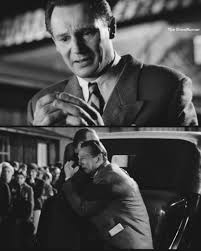
What does this look like practically? Imagine the movie Schindler’s List. The movie is about a war profiteer named Schindler who works for Nazi Germany during world war two. Schindler originally is greedy and selfish, but becomes altruistic as he grows a fondness for the Jewish people who is undergoing death sentences at concentration camps. The movie is about his efforts to rescue Jewish people from the Holocaust. There is a powerful scene at the conclusion of the film. Schindler becomes distraught at a ring. He associates the value of the ring with the potential lives he could have saved from the Holocaust. He breaks down weeping as all of his material possessions are measured in terms of lives he could have saved.
I offer for your reflection that Schindler’s tearful evaluation of his material possessions is a truly biblical relationship with material possessions. Money itself has no value. Money put to the use of building up the kingdom of God can bring about wonders. Schindler was entrusted with much and he used it to save the lives of the Jewish people.
A spirituality of wealth ought to do the same for everyday purchases. Money is at the same time everything and nothing. It can be used to satisfy our personal vices or it could be used to bring about the mercy of God. We who possess wealth must see it as a grave responsibility of stewardship. Because the rich has been entrusted much and for that reason much will be expected of them. Imagine a world where non-profits, schools, and hospitals mention a lack of funds and wealthy individuals immediately filled the need. Imagine billionaires losing their status as billionaires because of aggressive philanthropy. Imagine the income disparity disappearing due to the generosity of the most fortunate.
The story of the rich young man shows the great risk to those who possess material possessions.
And Jesus, looking at him, loved him, and said to him, “You lack one thing: go, sell all that you have and give to the poor, and you will have treasure in heaven; and come, follow me.” Disheartened by the saying, he went away sorrowful, for he had great possessions.
And Jesus looked around and said to his disciples, “How difficult it will be for those who have wealth to enter the kingdom of God!” And the disciples were amazed at his words. But Jesus said to them again, “Children, how difficult it is to enter the kingdom of God! It is easier for a camel to go through the eye of a needle than for a rich person to enter the kingdom of God.” – Mark 10:21-25
The disciples were amazed at the words of Jesus, because wealth was an indication of being blessed by God. After all, the wealthy are able to escaped most of life’s toils and troubles. Jesus refutes this closely held belief. Instead, the wealth is an obstacle to a relationship with God. Jesus teaches us Christians that self-gift is expectation of any Christian life style. Therefore, any lifestyle that solely serves that self will cause strife against our relationship with God. It is difficult for the rich to enter the kingdom of God, but not impossible. Being rich can be a path to holiness, but it is very narrow and very treacherous for the soul. It very well could be easier to fit a camel through an eye of the needle…
Our God emptied himself and took the form of a slave. (Philippians 2:7) So often, Poverty is seen as the only option to grow in holiness. There are stories of heroic virtues of people embracing poverty for the sake of God. For example, Saint Francis sold all of his possessions and renounced his wealthy inheritance. There are countless other stories of Saints performing similar acts of charity. The Average Catholic would not go to such extremes. We may not preach on street corners, but we could host missionaries at our house and give them water. (Matthew 10:42)
Much is expected of the rich, for they possess many possessions. However, we do have saints that have come from incredible wealth. These saints lived a life of poverty not due to a lack of possessions, but a lack of attachment to their possessions. Everything they owned was put to the service of the church and her faithful. Truly, these holy men and women had no love for money, but only love for God’s beloved children.
- St. Louis: King of France who was charitable with his wealth.
- St. Helena: Mother of Emperor Constantine, a wealthy supporter of the church.
- St. Thomas More: An attorney and former Lord Chancellor of England who was a man of great status and wealth.
- St. Edward the Confessor: King of England.
- St. Henry: Holy Roman Emperor.
- St. Elizabeth of Hungary: A princess who was known for her charitable works.
- Katharine Drexel: Inherited a large fortune and used it to found schools and missions.
- St. Paula: A noble Roman widow who funded St. Jerome’s work.
- St. Joseph of Arimathea: A wealthy follower of Jesus who provided for his burial.
What is the proper relationship with money? Money is not all evil, but it is also not all good. I suggest our relationship with money must be treated as we would tools of the trade in dangerous professions. The blacksmith reverence for his furnace that burns thousands of degrees. The chemist reverence towards toxic chemicals. The miner reverence towards explosives. The acrobats reverence towards heights. The skydiver reverence towards parachutes. The scuba diver reverence towards the depths of the ocean. The priest reverence towards his ministry (Matthew 18:6).
We can only conclude that money is a dangerous substance for our soul. We are able to commit many sins with money. Even the lack of use of money could be cause for sin. It is only when we humble ourselves and put the money in service for the Greater Good that we are able to have some protection. Selling all of our possessions and devoting our lives to Christ is a noble cause, but not all of us is called to do so. Still, we must have proper stewardship over our money lest we ourselves be found wanting and cast to where there is weeping and gnashing of teeth.
Remember, “the path to Hell is paved with good intentions.” There have been plenty of philanthropist who have been a part of corruption, scandal, and crime. Al Capone gave to charity while also committing atrocious crimes. The Average Catholic must love God with all of their Heart, Mind, and Body. Why not have their wallet love God as well? If we are defensive about how we spend money, then pray with God about what is align with the bible and church teaching. In summary, we must have a detachment towards money. Living with financial insecurity is difficult, but God commands us to not be anxious about the future. (Matthew 6:25)
Money is needed, but God is necessary for our salvation. Put God first and everything else follows. As Saint Augustine says, “Love and do what you will.” We can be Catholics in good standing of the church without succumbing ourselves to destitution. The money we have in modern times has reached unprecedented levels of abundance. The last one hundred years has lifted billions of people out of poverty to experience a quality of life like never before. Yes, money can be used for good. No, money is not the key to salvation. The love of Money is to be avoided. The love of God and neighbor is to be encouraged. The question the Average Catholic should ask themselves is “How can I love God and neighbor with my money?”
 The Average Catholic: More Articles Here!
Leave a comment