
I had an idea for a painting and I finally made it come alive. Thank you to @marialouisarose.art for giving my idea life. You can find more of her work at the link: https://www.instagram.com/marialouisarose.art/
The painting I wanted to do was inspired by the Widow’s coin found in Mark 12:41-44. The passage goes, “Jesus sat down opposite the place where the offerings were put and watched the crowd putting their money into the temple treasury. Many rich people threw in large amounts. But a poor widow came and put in two very small copper coins, worth only a few cents. Calling his disciples to him, Jesus said, ‘Truly I tell you, this poor widow has put more into the treasury than all the others. They all gave out of their wealth; but she, out of her poverty, put in everything—all she had to live on.’”
Here are some other bible passages that inspired the painting.
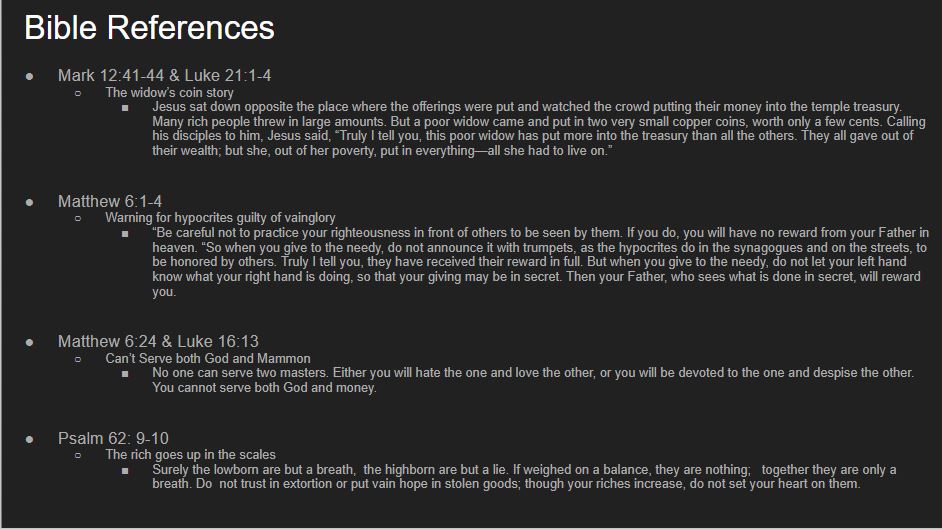
This bible passage always resonated with me, because it shows the paradoxical value system God has. Throughout the bible there are instances when God corrects mankind about what is right/wrong; Good/Evil. The widow’s coins is one such paradox where, in a monetary sense, the Rich men are clearly giving more monetarily with their bags of gold than the widow with her few pennies. Yet, Jesus says that the widow is the one that has given more spiritually. The explanation is that the rich man have given out of their excess as opposed to the widow who gave away her whole living. What God values is our sacrifice in comparison to our personal capacities. We must give God our all not just a lot. The rich men never truly gave up their love for riches, but the widow did.
This message has brought me peace in developing a prayer life in the busy world that we live in. All too often I thought, “I don’t pray enough. Look at the Saints and the cloister/monastery who prayer hours a day.” The simple truth is that the Average Catholic does not have hours to pray. Between work, chores, bills, health routines, commuting, eating, sleeping, and whatever else demands are time, we simply do not have time to give for intentional focused prayer without neglecting our duties and responsibilities. That makes us the widow in the story. If we only have 20 minutes of true free time and we give that free time to the Lord for prayer, then that is holiness. In comparison, if a cloistered religious spent only one hour of prayer and 23 hours on their selves, then they would be reprimanded similarly as the rich men were in the story of the widow.
This is the painting:

The atmosphere of the painting is intended to feel like a cave. It is an allusion to Plato’s allegory of the cave. Jesus is standing at the exit and is inviting people to leave the cave, but only the widow answers His invitation. Leaving the cave requires being accustomed to brighter light and the inherent effort of climbing stairs. Our spiritual journey requires similar mortification in order for us to grow in the spiritual life.
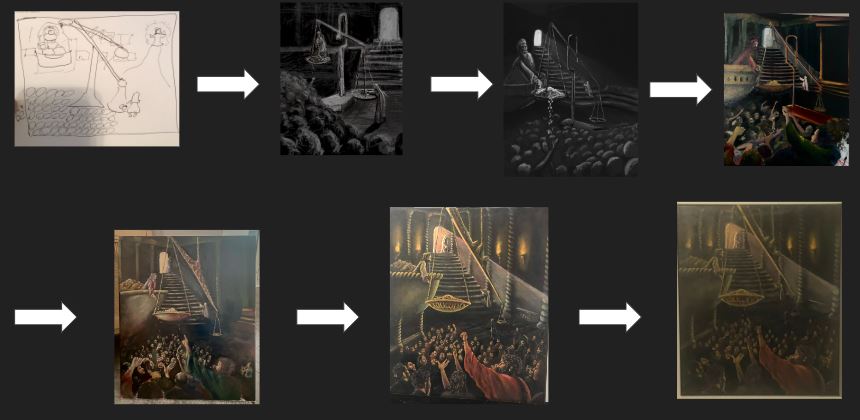
It was fascinating to work with the artist in creating the image. I had an idea and she had the skill. The transformation of the various stages always impressed me and I am grateful for all of the work that she did.

The scale takes center stage in this picture. It perfectly expresses the paradox found in the story of the widow’s coin. The widow may not have given much to the treasury but she gave all that she had. She may not have added much to the collection, but she did show her love for God more so than the rich man. We see this as the two pennies weigh more than the pile of gold on the scale. Therefore, the exaltation of the money donated is an illusory superficial exultation. The true value is placing God first which the widow does, but the rich man fails to do.
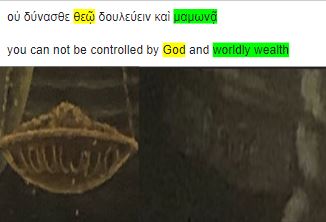
At first glance, the scale and a part of the wall at the base of the stairs have ornamental decorations. However, subtlety painted are two Greek words: mamona and theos. On the scale, the Greek word for worldly wealth is written. On the wall, is the Greek word for God. The Greek words are placed close to their respective servants. The rich man and the crowd is serving mammon and the widow is serving God.
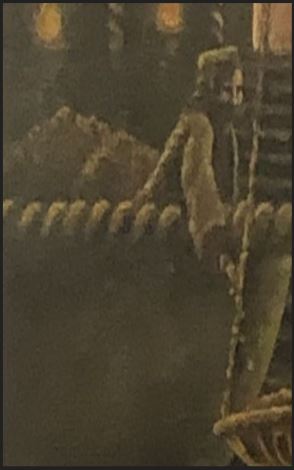
The rich man is giving his offering to the temple. Behind the rich man is a pile of gold to show he is only giving a fraction of his wealth. The expression on the rich man’s is a shadowy twisted smile. The Rich man is receiving his reward on earth; the praise of the people in the temple. This is a relationship of use between the rich man and the crowd. The implication is that the Rich man is doing this only for the popularity and has no concern for God. His elevation also is in competition to Jesus at the top of the stairs. Implying that the rich man is becoming a false idol for the crowd.

There are 62 heads in the crowd. This is a reference to psalm 62. In the psalm, a scale is used as a metaphor to not trust stolen goods and how impermanent wealth truly is. The crowd also have a happy/angry mood to show a strong lust towards money that is disproportionate and causes some fighting beneath the scale where some coins are falling. The crowd is meant to have a lot of activity in order to distract the viewer away from Jesus and the widow who are the true protagonists in the painting.
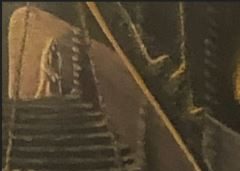
Jesus stands at the top of the stairs standing in the natural light. He is a small figure almost easy to miss in the background. The painting is designed to have the viewer of the painting commit the same sin as the crowd in the painting. The focus is intentionally pulled away from Jesus with activity and size. Only the lightning would suggest any importance to the figure at the top of the stairs. Yet, Jesus indeed is the most important person in the painting and only the widow is looking at Jesus.

The widow in the story is hidden in the background. She almost blends in. She does not donate for the recognition and praise, but for the love she has for God. She is positioned turned towards God and away from the coins to show her detachment of money. She is also isolated and separated from the Crowd. Showing how following Christ often leads to being the minority. She is willing to put in the effort of facing the light and climbing the stairs towards Jesus where the rest of the crowd is eagerly seeking the riches owned by the rich man.

On the very edge of the crowd is a person that is turned away from both Jesus and the money. This shows those who have no interest in either master. How, ultimately, they live a life of solitude cut off from the goings-ons of the world.

The relationship between Jesus and the widow is being compared to the relationship between the rich man and the crowd person. Jesus and the rich man are exalted as higher to the widow and crowd person respectively. The widow and crowd person are both raising their hands in supplication that they too may be exalted.
Both Jesus and the Rich man are offering their hands to their counterpart. However, the rich man is offering money, while Jesus is only offering Himself. Meanwhile, the widow and the crowd person is being compared as well. Both have their arms raised and stretched to their exalted counterpart. However, the widow has her hand raised in a sign of reception, while the crowd person has his hand raised in a fist ready to take.
Jesus and the widow has a relationship of mutual self-gift. But the Rich man and the Crowd person has a relationship of use on both sides. Jesus wants the widow to be raised up; hence the stairway. But the rich man has no intention of raising up the crowd person to be his equal as he stands in his balcony with no access point by the crowd.
In conclusion, this was a really fun project. I’m humbled at how much goes into the artwork and am grateful of being a part of the Catholic Tradition of depicting bible stories in art. When researching for the painting, there were not many images of the widow’s coin. God willing, this story will be an inspirational tale for those who hear it. Let us not set our hearts on the earthly things, but on heavenly things. Where our heart is is where our treasure is. (Matthew 6:21)
Thank you for listening to the story of this painting. I hope you enjoyed it!
 The Average Catholic: More Articles Here!
Leave a comment