
My apologies for the tongue twister of a title. I couldn’t resist. This article is about how describing something as “good” is better than describing something as “best.” Language is an amazing tool to communicate ideas. The words we choose have meaning to them. Words have power that is beyond our control. If I wrote the word “unionized”, then a chemist would see “un-ion-ized,” but a union worker would see “Union-ized.” This pattern association or connotation is an inevitable consequence of language.
In America, so many people strive to be the “best.” The best coffee, the best trader, the best student, the best parent, the best child, the best spouse, the best lover, the best blog article (surely not I, Lord?) All of these “bests” have a connotation. That connotation may be clearer if we take the same phrases but exchange “best” for “good.” A good coffee, a good trader, a good parent, a good child, a good spouse, a good lover, a good blog article (if it be Your will, Lord).
Do you hear it? The best thing is different than a good thing. But what is the difference? Funny enough, I tried to keep the article “the” for both list of words. But, “the good parent” or “the good coffee”, irked me something fierce. Perhaps, I am just overanalyzing things. Or, there is some wisdom that can be found in the difference between “good” and “best.”
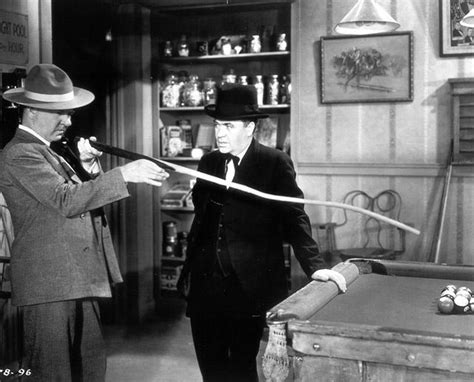
The inspiration for this blog came during a joke made at a billiards table. The table was at a college bar and was, shall we say, well loved by the patrons. You have the typical set up: balls, rack, cue sticks, and chalk. There were a variety of cue sticks. The quality of the cue sticks were varied. One day, one of my class mates was leaning on the “good” cue stick. I see this and joked, “careful with that. If you lean on that “good” cue stick, then it will no longer be the “good” cue stick. It will become the “best” cue stick.”
I liked the turn of phrase, but it shortly struck me the linguistic revelation. Often time, “good” is considered lesser than “best.” However, my joke made it so that it was “best” that was lesser than “good.” I realized something that day. The word “good” is more objective than the word “best.” Put another way, being the best always require a comparison to others, but being good requires no such comparison.
Now, look back to the list of examples. The list with “best” feels more exhausting than the list with “good.” Being the best requires top performance at all times without tiring or error. Being good is simply doing what needs to be done; no more no less. Everyone wants to be the best. However, by definition, only one person or group can be the best. The “best” is a relative description reserved for a singular entity. Only one individual or group can be the best, because the best is in comparison to all others. The “good” is an objective description which could be apply to multiple entities. A good parent can be found in multiple places, but the best parent can be found only in one person.
Remember, I struggled with using the article “the” with the list that had “good.” That is because using the “the” connoted a comparison to the things that were not good. The GOOD parent implies a bad parent. The GOOD coffee implies a bad coffee. The article “a” does not give such connotation of comparison. “A good” parent could exist without the existence of a bad parent. “A good” coffee could exist without the existence of a bad coffee.
Why is this linguistic gymnastic important? Let us talk about God who is Good. God is Good. All the Time! All the Time, Good is Good! That old cheer trivializes a profound truth. That God is indeed Good. We say good, because why would we say best? There is no other Gods that compare to the God of Abraham, Isaac, and Jacob. Monotheism makes the bold claim that there is solely one God and any other beliefs that contradict that proposition is false. The word “best” implies a comparison and the Triune God has no comparison.
Does this mean that God is the worse or is no good at all? NO! Aristotle said anything we call “good” is a thing that does well what its nature/design/form is meant for it to do. A fork is a good fork when it stab things. If a fork cannot stab things, then it is a bad fork. God is Good past, present, and future. God who is love lives a life only of love. God exists in a relationship constantly giving to one another in the Trinity. God will be a Good god. Because God never stops being God. God does well what God’s nature is: Love.
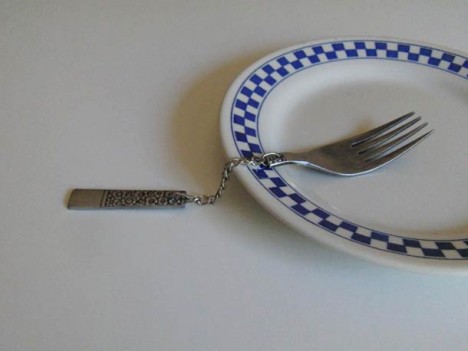
Why strive to be the “best” when you can be “good.” Striving to be good would naturally lift up the best to their rightly deserved position. What I am really asking is, “Why be the ‘best’ if it sacrifices the things that make life worth living?” Listen to the words of our Savior, “What good is it for someone to gain the whole world, yet forfeit their soul?” (Mark 8:36) We are built for one thing: to love God and to be loved by God. We are made in the image and likeness of God. We are already intrinsically and irrevocably made good. Why do we need to be the best? I rather be good as my Heavenly Father is Good. If we humbly strive to be good, then we will receive all that we need: no more no less.
Psalm 131
A song of ascents. Of David.
My heart is not proud, Lord,
my eyes are not haughty;
I do not concern myself with great matters
or things too wonderful for me.
But I have calmed and quieted myself,
I am like a weaned child with its mother;
like a weaned child I am content.Israel, put your hope in the Lord
both now and forevermore.
 The Average Catholic: More Articles Here!
Leave a comment